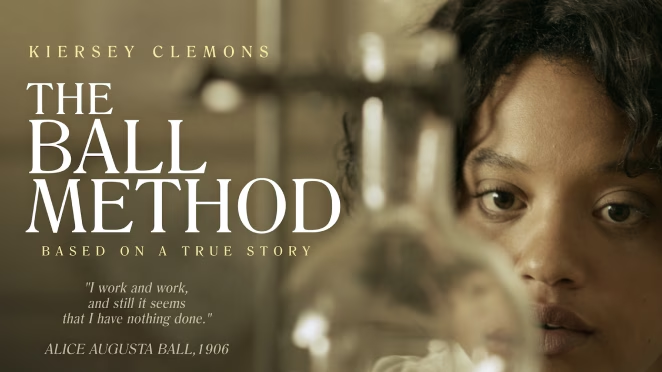
Short film retracing the life of Alice Ball, an African-American chemist who developed the first effective treatment for leprosy. In just six minutes, the film gives this pioneer the recognition she deserves and perfectly illustrates the Matilda Effect.
The Ball Method (2020) film poster by Dagmawi Abebe
The Ball Method short film teaser by Dagmawi Abebe
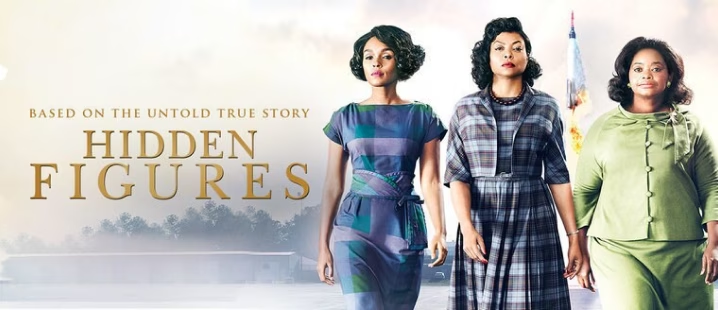
HIDDEN FIGURES (2016)
Director: Theodore Melfi
Inspired by a true story, the film highlights three African-American NASA mathematicians whose calculations enabled Apollo space missions. A poignant narrative about perseverance and recognition of Black women in the sciences.
Hidden Figures (2016) film poster by Theodore Melfi
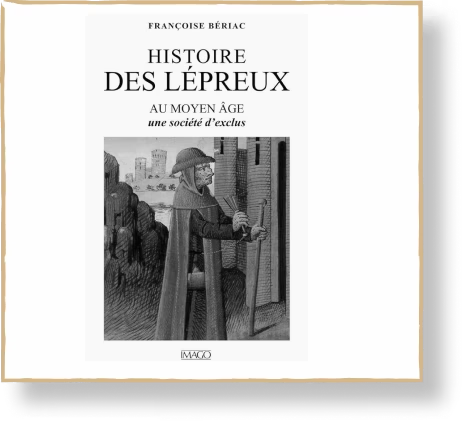
HISTORY OF LEPERS IN THE MIDDLE AGES: A SOCIETY OF OUTCASTS
Author: Françoise Bériac
Historical study on the marginalization of the sick in medieval society. This book sheds light in parallel on the story of Alice Ball, whose discoveries concerned the same disease but in a context of discrimination and social exclusion.
History of Lepers in the Middle Ages book cover by Françoise Bériac
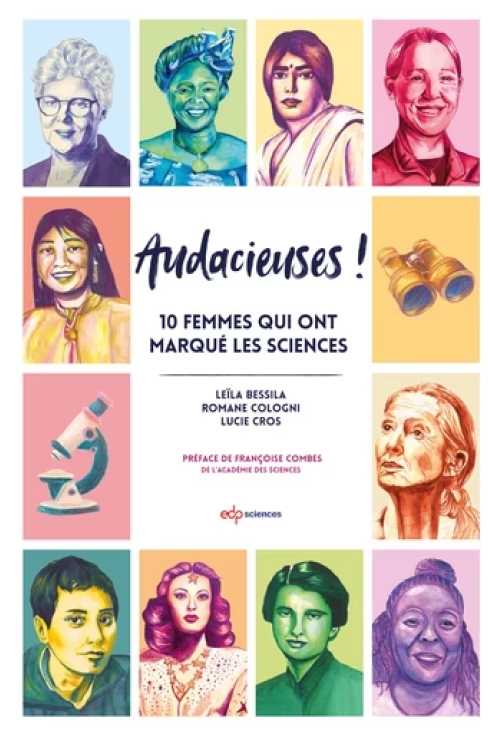
Ten inspiring portraits of women scientists who changed our vision of the world, including Alice Ball, but also Marie Curie, Katherine Johnson, and Rosalind Franklin. The book shows how their discoveries revolutionized their fields, while highlighting the injustices and omissions related to their gender.
These films and books have one thing in common: they give a voice back to those whom History has silenced. Through cinema and writing, memory becomes an act of justice, a way of saying, finally: they were there.