

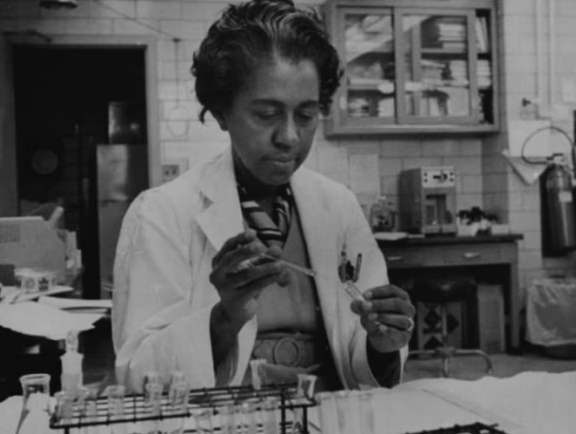
Born on July 24, 1892 in Seattle, Alice Augusta Ball grew up in a family of photographers, an environment where chemical processes related to image development introduced her to science at an early age.
She earned two bachelor's degrees (pharmaceutical chemistry and pharmacy) from the University of Washington, then went to Hawaii to pursue a master's degree in chemistry. She became the first African-American woman to earn this degree at that institution. Her major contribution: she modified chaulmoogra oil to make it injectable, creating what would later be called the "Ball Method".
This technique was used for nearly 20 years to treat Hansen's disease (leprosy). After her death in 1916, her research was taken up by male colleagues who failed to credit her work. Alice Ball's name fell into obscurity for decades, until her memory was rehabilitated in the 21st century. This example illustrates the Matilda Effect: the minimization or unfair appropriation of women scientists' contributions.
→ READ MOREShe offered healing to others, without ever receiving the credit.